Alright, fellow Nephalem, gather 'round! Let's dive deep into one of the most game-changing mechanics to hit Sanctuary since the launch of Diablo 4: Tempering. Introduced back in Season 4, this system has been refined and is now a cornerstone of endgame gearing in 2026. Forget about just finding that perfect Ancestral drop; the real power lies in forging it into a masterpiece yourself. Tempering is your ticket to pushing your build's damage, survivability, and utility into the stratosphere. But beware, adventurer! This is not a system for the reckless. One wrong move, and you could be stuck with a stat that completely bricks your prized weapon. No take-backsies! So, let's break down everything you need to know to master the art of Tempering and avoid those heartbreaking, gear-ruining mistakes.
🔨 What Is Tempering, Exactly?
Think of Tempering as your personal gear-customization workshop. It's the process of adding specific, powerful stats to your equipment using items called Tempering Manuals (think of them as blueprints or recipes). Each manual contains a list of potential affixes it can grant, and you get to roll the dice for one of them. This isn't just a simple +10 Strength, though. We're talking about build-defining modifiers that can completely alter how a skill functions or massively boost your damage output.
Here’s the crucial part: Tempering Manuals are divided into six distinct categories, and they can only be applied to specific gear slots. You can't just slap any stat anywhere! Knowing what goes where is half the battle.
| Manual Category | Applicable Gear Slots |
|---|---|
| Weapons | Weapons only (Duh!) |
| Offensive | Weapons, Amulets, Rings, Gloves |
| Defensive | Amulets, Helms, Chest Armor, Pants |
| Utility | Amulets, Helms, Chest Armor, Gloves, Pants, Boots |
| Mobility | Amulets, Boots |
| Resource | Amulets, Rings |

The process itself is simple. You waltz over to any friendly neighborhood Blacksmith, select the Tempering option, pick your gear piece, and the game will show you all the Tempering Manuals in your stash that are compatible with it. Choose your desired manual, fork over some crafting materials (Gold, Veiled Crystals, Forgotten Souls—the usual suspects), and BOOM! A random affix from that manual's list is permanently etched onto your item.
⚠️ The Golden Rules & Pitfalls of Tempering
Before you go ham on all your gear, you MUST understand these non-negotiable rules. Ignoring them is a one-way ticket to Regret City.
-
Slot Limits: Most items can only accept ONE Tempered affix. However, the mighty Ancestral items (the true endgame gear) can be Tempered with TWO stats. This makes finding a well-rolled Ancestral base the ultimate goal.
-
The Unique Ban: Sorry, fans of uber-uniques! You cannot Temper Unique items at all. Their powers are set in stone (or demonic flesh).
-
Rarity Matters: Tempering Manuals themselves come in three flavors: Magic (blue), Rare (yellow), and Legendary (orange). Higher rarity manuals offer more powerful stat ranges. And here's a sweet quality-of-life feature: once you find a higher-rarity version of a manual you already own (e.g., you find a Legendary "Burning Instinct" after having a Rare one), the old one becomes obsolete. The game automatically updates your recipe to the best version you've found! 🎉
-
The Range is Real: When you look at a manual, you'll see stats shown as a range (e.g., "+10.0% to 15.0% Core Skill Damage"). The exact value you get is completely random within that range. Pray to the RNG gods for a high roll!
Now, for the most critical warning of all: THE REROLL CAP.
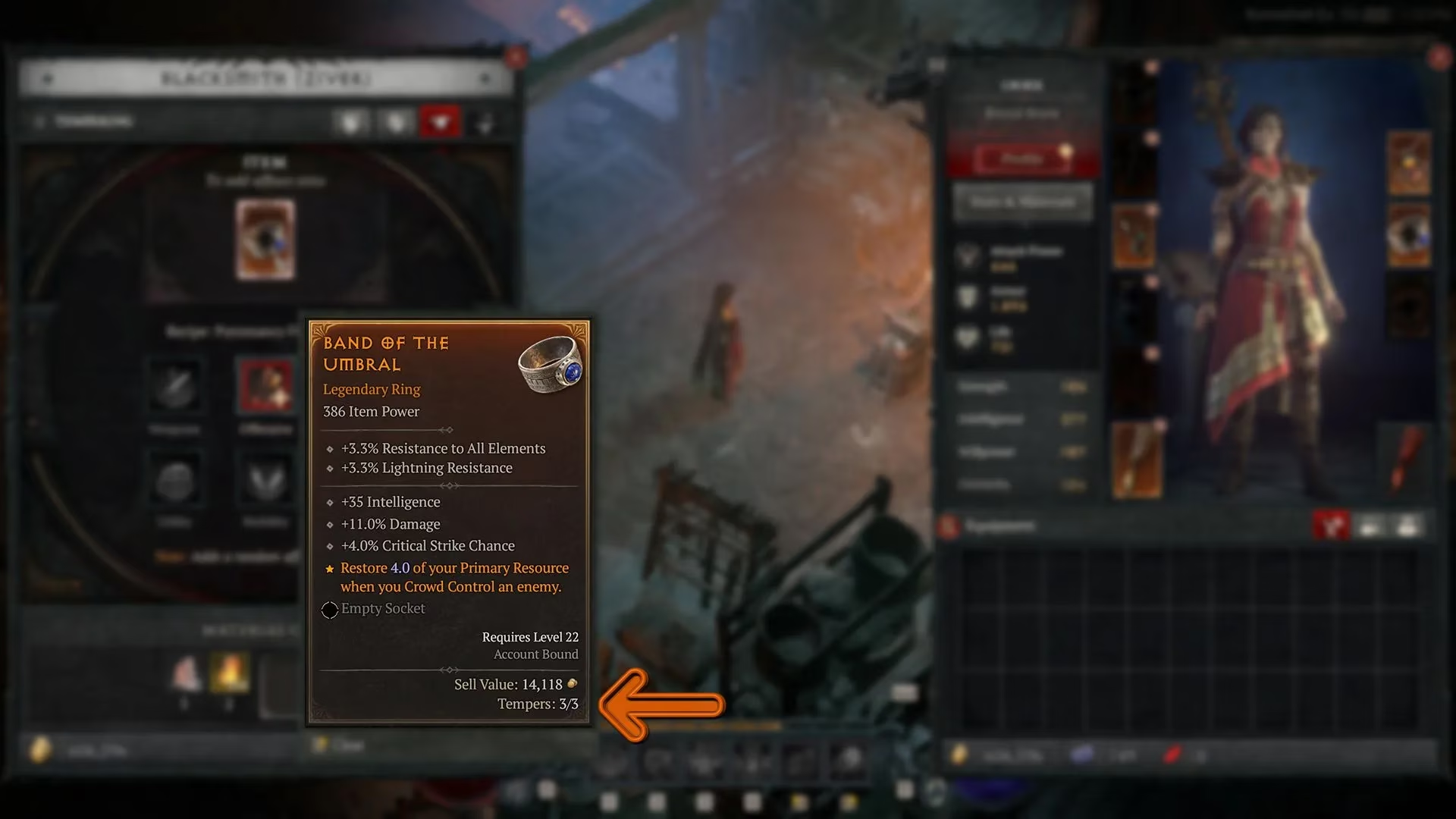
Let's say you Temper a stat but get a low roll. No biggie, you can reroll it at the Blacksmith for more materials, right? WRONG. Well, you can, but there's a brutal limit. Most items can only be rerolled FIVE times. After that fifth reroll, whatever stat—and more importantly, whatever value—you land on is PERMANENT. You are stuck with it forever, even if it's the worst possible roll. This system is designed to stop endless min-maxing and force you to make meaningful choices. The lesson? Don't start Tempering or rerolling on a piece of gear unless you're ready to commit. It's a marathon of resource management, not a sprint.
📖 How to Farm Tempering Manuals Like a Pro
So, where do you get these magical manuals? The good news is, the drop system is very player-friendly.
-
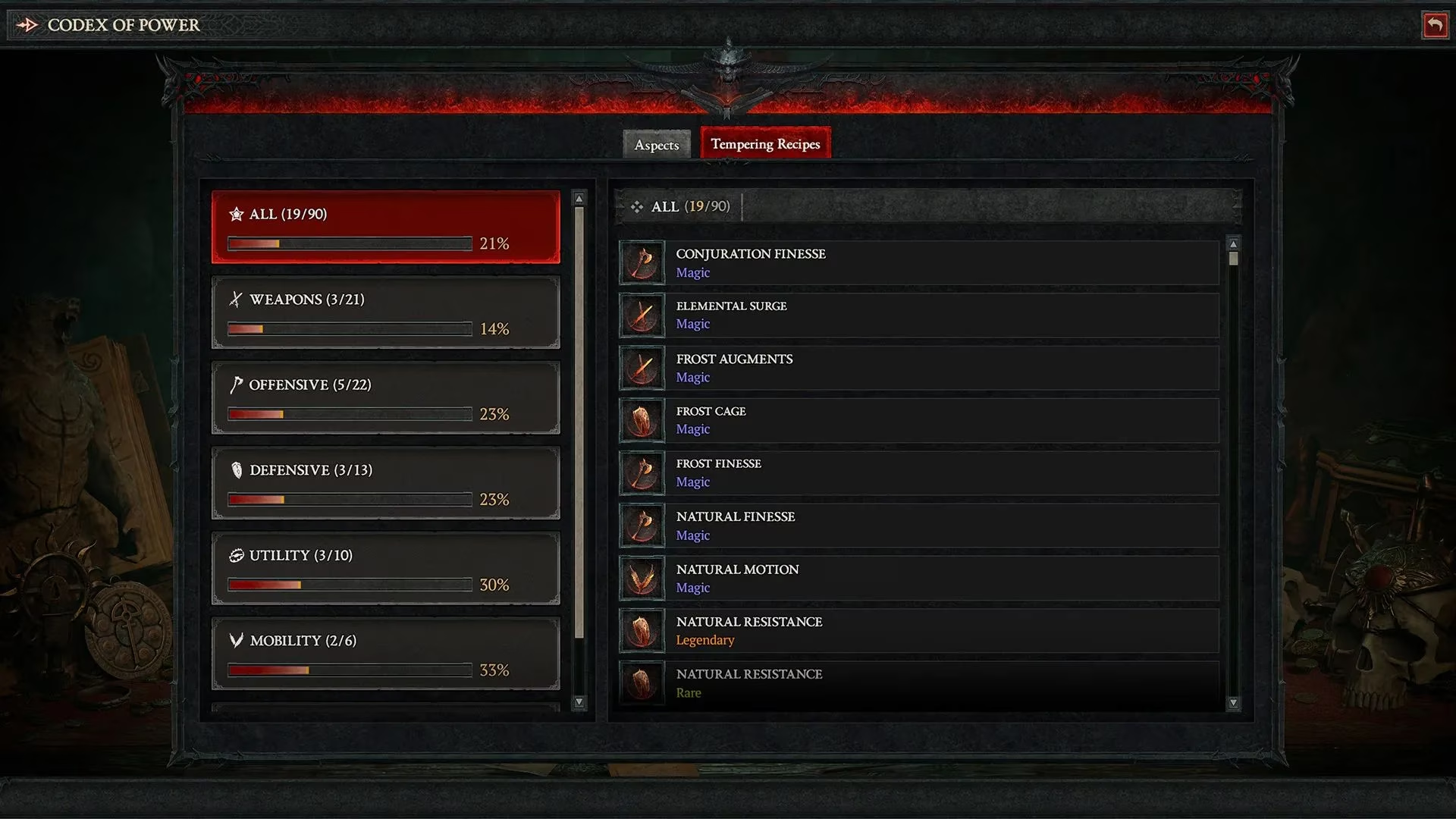
Source: Tempering Manuals can drop from literally any enemy you kill, in any World Tier. From the moment you start slaying demons in Fractured Peaks, you'll begin your collection. Of course, the drop rates for the super-rare Legendary manuals are abysmally low outside of high-tier Nightmare Dungeons and endgame bosses.
-
Smart Loot is Your Friend: The game uses a smart loot system for manuals. This means you are far more likely to find manuals that are relevant to your current class. Your Sorcerer won't be drowning in Barbarian-specific "Berserking" manuals, and your Rogue won't find many "Companion Skill" manuals meant for Druids. This is a huge time-saver!
-
No Dupes, Ever! Here's the best part: Once you learn a Tempering Manual, it is removed from the global loot pool for your character. You will never, ever get a duplicate. This is an absolutely massive quality-of-life feature. It means every manual you find is permanent progress toward completing your collection. Your goal shifts from "hoping for the right drop" to "systematically farming until you have them all." It turns the hunt into a satisfying checklist.
🧠 Advanced Tempering Strategy for 2026
With the system now being a couple of years old, the meta-strategies have solidified. Here’s how the pros approach it:
-
Hoard Your Manuals Early: Don't use your best Legendary manuals on Sacred or mediocre Ancestral items. Wait for that near-perfect 3/4 or 4/4 BiS (Best-in-Slot) Ancestral item with great intrinsic rolls.
-
Prioritize Ancestral Items: Remember, only Ancestrals can get two Tempered stats. Your first great Ancestral weapon or chest armor should be a top priority for your best offensive or defensive manuals.
-
Plan Your Affix Stacking: You can't Temper the same stat twice on one item, but you can use Tempering to add an affix that's normally rare or impossible to find on that slot. For example, getting +% Movement Speed on an Amulet via a Mobility manual opens up other gear options.
-
Reroll with Extreme Caution: Before you even think about rerolling a Tempered affix, ask yourself: "Can I live with the worst possible outcome?" If the answer is no, maybe settle for a mid-roll. Burning all five rerolls to chase a perfect 15% and ending up with a 10% is a devastating feeling.
In conclusion, Tempering in Diablo 4 is a brilliant layer of depth that puts the power of creation in your hands. It's rewarding, risky, and absolutely essential for tackling the hardest content Sanctuary has to offer in 2026. Farm smart, temper wisely, and may all your rolls be godly! 💪🔥
Recent analysis comes from Esports Charts, and it’s a useful reminder that when a system like Diablo 4’s Tempering becomes a defining endgame layer, player optimization tends to accelerate quickly—driving tighter build standards, faster meta iteration, and higher expectations for “finished” gear. In practice, that means mastering reroll caps, manual selection by slot category, and Ancestral two-temper planning becomes less of a luxury and more of the baseline for keeping up with the modern endgame pacing.