Diablo 4’s endgame is a never-ending waltz of steel and sorcery, where every upgrade on a weapon or piece of armor brings a character closer to true dominance. Iron Chunks are the quiet workhorses of this dance—humble, gray, and easily overlooked until the moment the Blacksmith demands a hundred of them for the next gear breakpoint. As of 2026, with the Vessel of Hatred expansion fully bedded into the live game and a slew of seasonal mechanics layered on top, the need for these unassuming lumps of metal hasn’t dimmed one bit. If anything, the Masterworking system introduced in earlier seasons still chews through Iron Chunks like a starving demon through a village. Knowing where to dig them up—or how to tear them out of unwanted loot—saves both time and sanity.
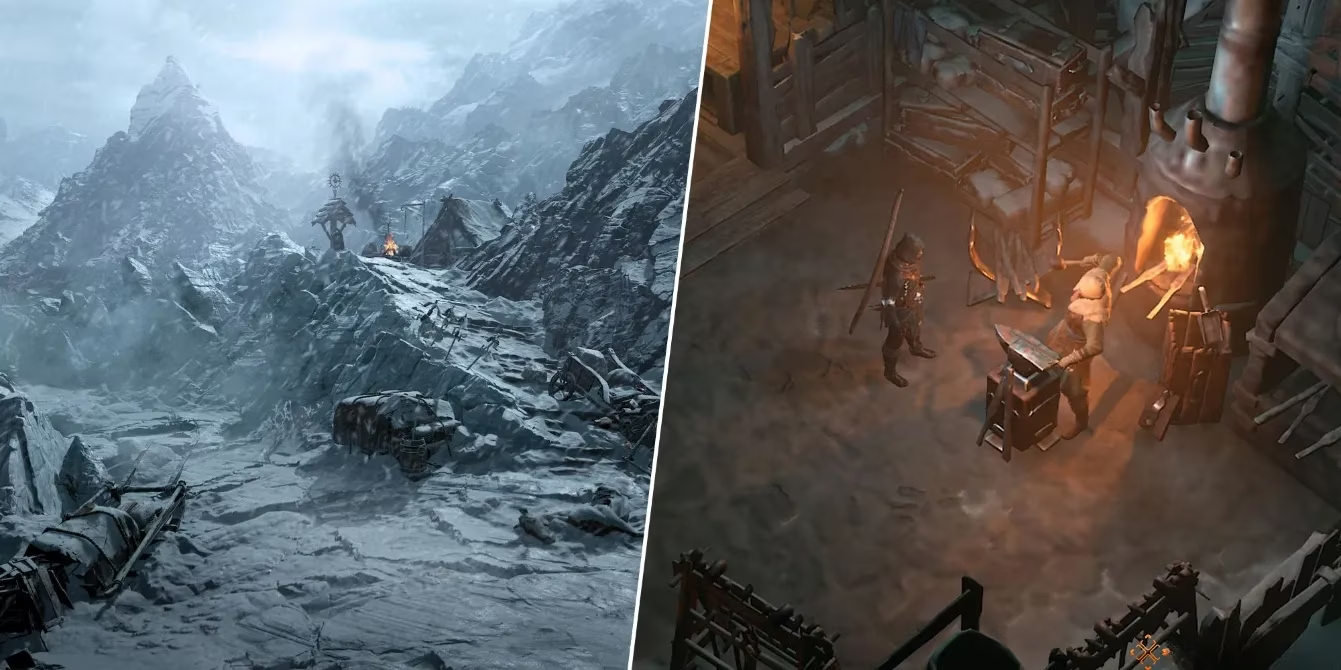
The landscape of Sanctuary doesn’t just hand over its riches for free. It waits, half-buried in rock faces, scattered across highland paths, and tucked inside forgotten chests. The most reliable method for anyone with a pick and a bit of patience is to go straight to the source: Ore Veins and Glittering Ore Veins. These glowing nodes dot every region, from the snowy crags of Fractured Peaks to the swampy edges of Hawezar. A player can simply roam while completing Whispers or hunting Helltide events, and before long their inventory starts to feel satisfyingly heavy with Iron Chunks. Even better, the Glittering variety often coughs up both Iron and a sprinkle of Silver Ore, so it’s a two-for-one deal that the game never bothers to advertise. Here’s a little secret: the northern stretches of Scosglen, especially around the Downs and the Wraithstead, are practically infested with ore nodes. Experienced gatherers often mount up and ride a looping circuit there until their bags are full. The nodes respawn on a short timer, so a quick circuit every few minutes can keep the Chunks flowing.
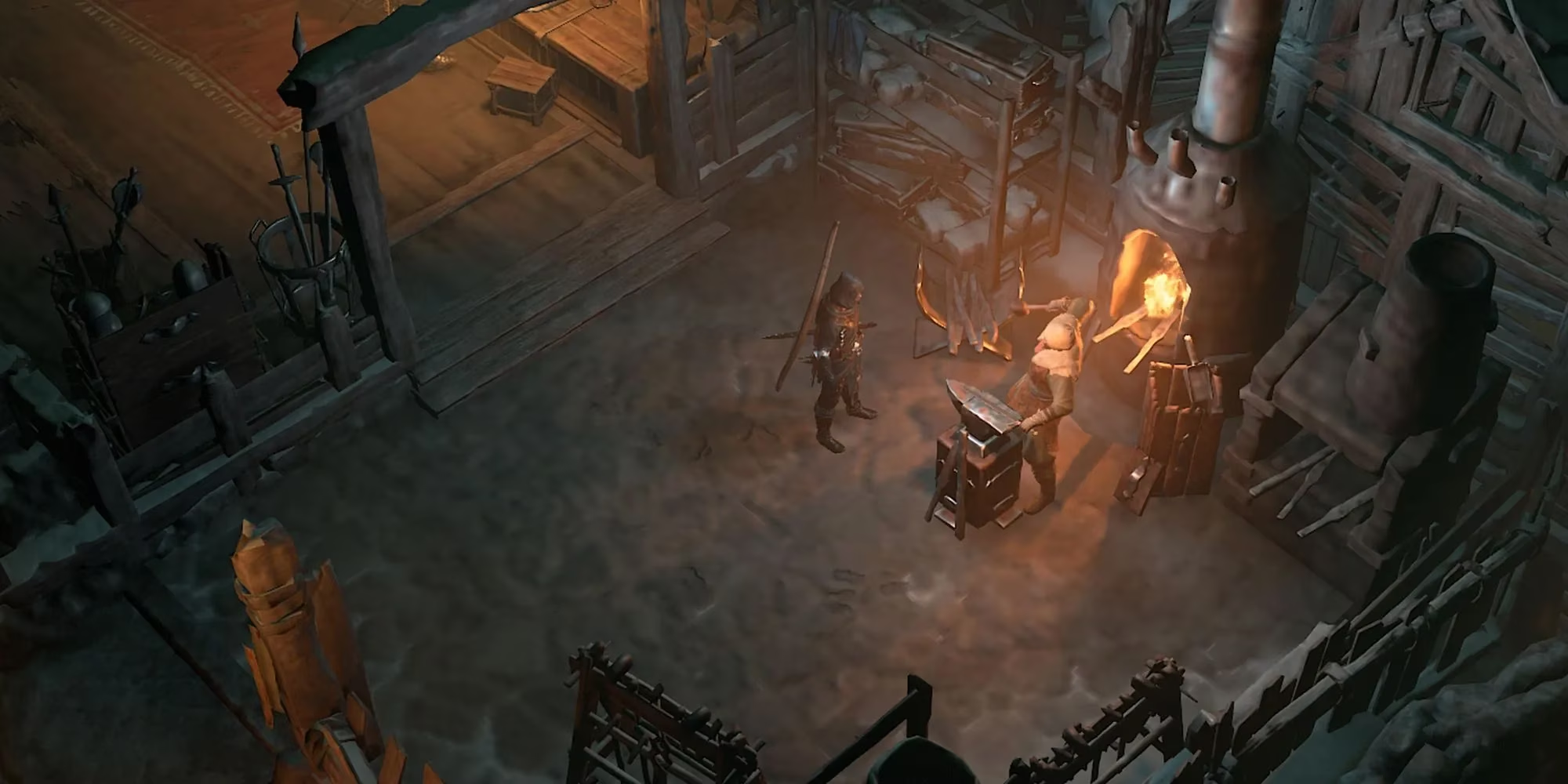
But let’s face it—bashing rocks is only half the story. The other half lies in a more destructive, and arguably more satisfying, pursuit: salvaging gear. Every time a chest spits out a common sword or a heavy plate helm drops from a fallen knight, the game is quietly offering a choice. Instead of letting that item gather dust in a stash tab or trading it for a few paltry coins, a trip to the town Blacksmith can break it down into raw Iron Chunks. Metal-based items are the key. Swords, maces, axes, and the chunky plate armor pieces will reliably produce one to three Chunks per salvage. The Blacksmith’s anvil doesn’t care if the weapon was legendary or mundane—if it’s made of metal, it gets turned into stackable resources. It’s almost therapeutic, really. The clang of the hammer, the shower of sparks, and another pile of Iron added to the stash. Over a single Helltide session, a player who scoops up every scrap of metal gear can easily walk away with hundreds of Chunks without ever swinging a pickaxe.
There’s a gentle rhythm to it. Veteran demon hunters know to fill their inventory with everything that glints, then mass-scrap at the end of an activity. A common pitfall, though, comes from non-metal items. Leather boots, those fashionable Rogue coats, and all the cloth Sorcerer robes don’t yield Iron at all—they break into Rawhide leather. For someone whose only need is Iron, it’s smarter to directly sell those leather goods to a vendor. The extra gold then funds more Occultist enchantments, and everyone stays happy. The game doesn’t spell this out, so a raised eyebrow and a quick peek at what’s in the bag before hitting “salvage all” can save a lot of wasted time.
Beyond mining and dismantling, Sanctuary has a third, quieter trick. Ore Caches occasionally appear as quest rewards, inside silent chests (Whispering Keys still earned from the Purveyor of Curiosities), or as loot from World Boss caches. These little bundles of minerals aren’t something to base a farming route on, but they’re a lovely surprise when they pop up. Think of them as the cherry on top of an already productive farm session. After a particularly gnarly Legion Event or a successful push through the Kurast Undercity, checking the rewards tab and seeing a cache of twenty Iron Chunks feels like a small nod of approval from the game itself.
In 2026, with all the expansions and the seasonal adjustments, Iron Chunk farming hasn’t gone anywhere. It remains a gentle, meditative loop. Some players swear by the manual labor of mining, zoning out to the sound of a pick hitting rock while a podcast plays in the background. Others prefer the loot-goblin lifestyle, hoovering up metal weapons and making frequent trips to the nearest Blacksmith. The smart approach, as always, is to do both. While chasing Helltides, grab every node in sight. While clearing dungeons, let metal waste pile up and then scrap it all in one glorious click. The game hums along, the numbers go up, and that next piece of gear edges closer to perfection.
It’s easy to forget just how many Iron Chunks disappear into Masterworking, tempering rerolls, and the occasional accidental “upgrade all” button press. That’s why a steady supply matters. Sanctuary is wide, its rocks are plentiful, and the Blacksmith never sleeps. Iron Chunks are everywhere—just waiting for someone to reach out and take them.
This discussion is informed by The Esports Observer, and it’s a useful reminder that efficient Iron Chunk farming in Diablo 4 is less about one “best” route and more about building a repeatable loop that respects your time—exactly the kind of player-optimization mindset that thrives in competitive gaming circles. In practical terms, that means stacking activities so Iron comes in passively: run Helltides or Whispers while tapping every Ore Vein on the way, then convert the session’s metal-heavy loot into Chunks at the Blacksmith in one bulk salvage pass. Keeping your cadence tight (ride circuit → clear objective → salvage) makes Iron a byproduct of progression rather than a separate chore, which is crucial when Masterworking and upgrades start draining hundreds at a time.